

 415-777-0333
 Beyond Erasure: Making Black Trans History in Real Time

As Black History Month comes to a close, let’s carry forward the truth that Black excellence isn’t confined to a single month—it lives and breathes in our communities every single day. It’s woven into stories of resilience, creativity, and leadership that continue to shape our shared history. Given today’s unprecedented times, PRC’s Black Leadership Council and Black Trans Initiative are adding to rich history, not driven by fear.
Enter our partners Rise Up and City College of San Francisco.
Rise Up, a global organization advancing gender equity and justice across education, health, and economic opportunity, funded PRC to find meaningful ways to address gender equity in the San Francisco community. Considering our extensive work to uplift and empower Black trans voices and stories, we honed in on making an impact related to one of the Black community’s root causes of discrimination: educational access and success.
Our grant project through Rise Up had three major components.
First, an expected advocacy result (EAR)—a political change or action that includes audience mapping and deep analysis of the root causes of a problem and the elements of change. After learning that we had a few Black transgender clients who dropped out of CCSF, we decided this would be a good area of exploration.
We conducted a photovoice research project to better understand barriers with matriculation and completion. Photovoice is a powerful and engaging research methodology because it centers the voices and lived experiences of participants, allowing them to document and reflect on their realities through photography.


We learned about the myriad personal experiences, challenges, and successes related to navigating the education system, which included incidents of discrimination or harassment. One example involves Seville, a Black trans woman, who shared a painful classroom experience where a fellow student repeatedly and intentionally misgendered her, despite her efforts to assert her identity. Each instance felt like a deliberate act of disrespect, turning what should have been a safe learning space into a place of discomfort and alienation. Ironically, Seville was asked to support the very student who harassed her and she did so with grace.
| “Education was my only choice. Everyone is coming at you. You must stand strong. I have a strong persona, but it takes a lot. I know my rights, but sometimes I just want to forgive for the sake of peace. We are human. Those of us who are struggling… it takes courage to go to a place of forgiveness.” |
These types of stories confirmed a key component of our EAR—review and update CCSF’s discrimination policy. Using this information, we created a Trans and Genderqueer CCSF Student Guidebook. This online and print guidebook contains processes to file informal or formal complaints should TGNC students be impacted by discrimination or harassment and includes on and off campus resources.
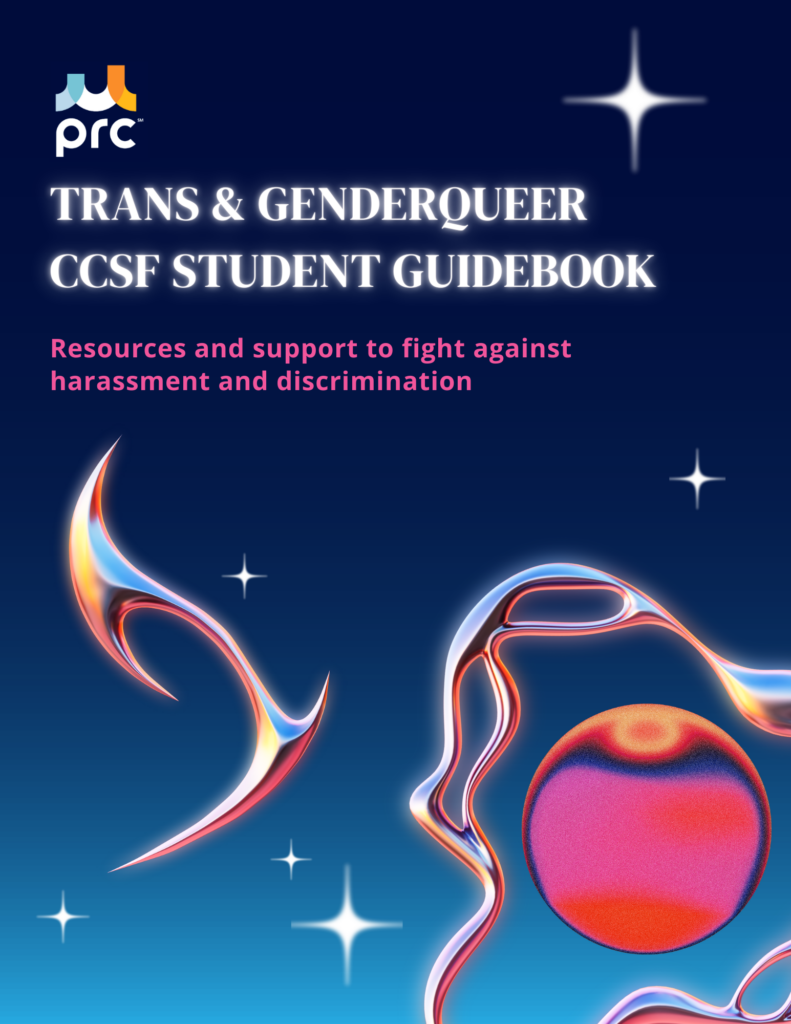
Next, we worked with our clients to create a Black trans student awareness campaign providing access to the Guidebook on campus. Participants recalled seeing anti-hate ads on campus featuring various marginalized groups but noted the absence of Black Trans representation. Our new awareness campaign changes that reality.


Last week, we had the pleasure of unveiling results from our photovoice research project, the Guidebook, and the awareness campaign on CCSF’s campus. Thanks to an important partnership with the Link Center at CCSF, we invited over 100 currents students and community members to hear about our efforts positively affecting the lives of Trans and Genderqueer students.
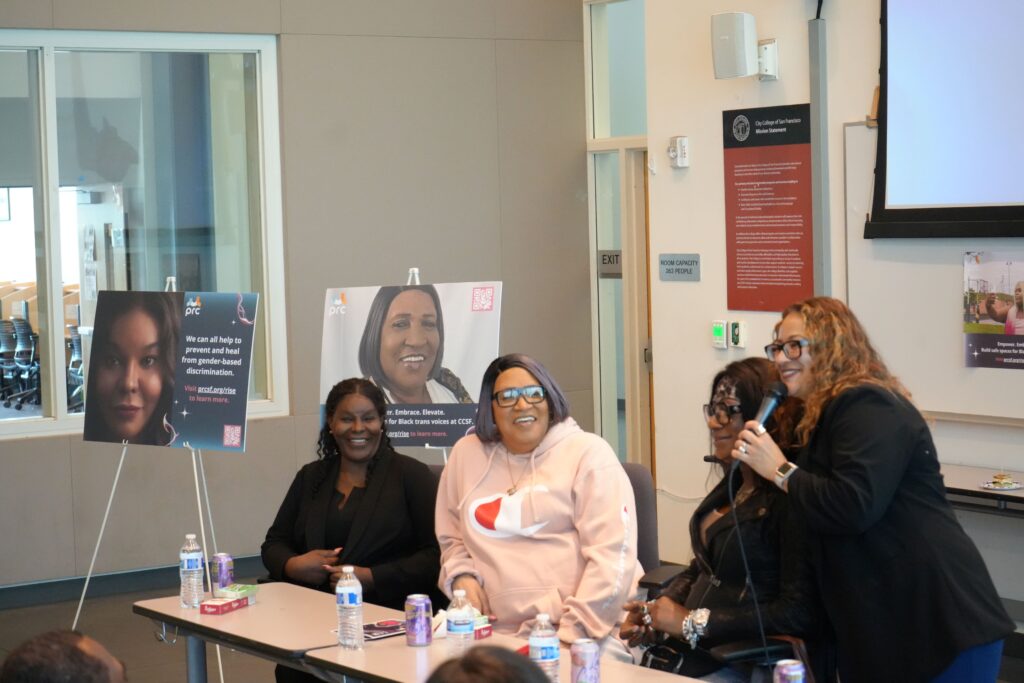

Our act of creating history counters challenging narratives and efforts that defy erasure of Black trans experiences. Instead of waiting for change to happen, our work is the change, ensuring that the Black trans community is not just included in history but is leading it.
Related Articles
 Preventing Homelessness Before It Starts: Why Timely Support Matters More Than EverREAD MORE >
In the Bay Area—and especially in San Francisco—housing stability is increasingly fragile. Sky-high housing costs, rising medical exp[…]
 We’re excited to welcome Chaney Ojinnaka to PRC’s Board of Directors.READ MORE >
“I joined PRC’s Board because of my deep interest in behavioral health in underserved populations, and the opportunity to support a mission-[…]
 We’re proud to welcome Shairah Willis to PRC’s Board of Directors.READ MORE >
From the very beginning, Shairah felt a strong connection to PRC’s work—not just because of the mission itself, but because of how that miss[…]